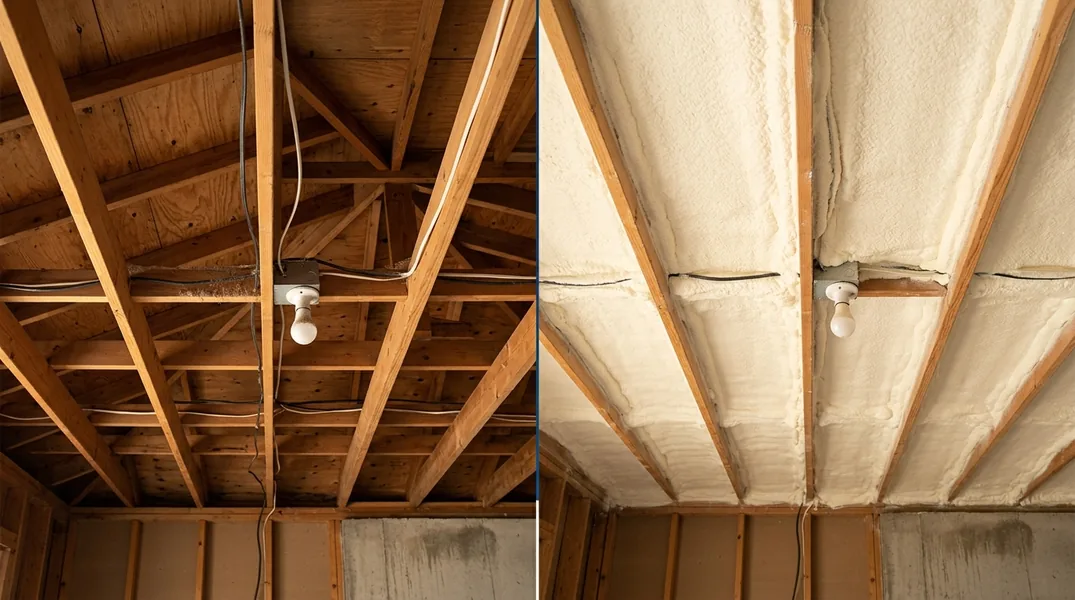
Why Mid-Century Ranch Homes in Wilmington Need Better Insulation
Mid-century ranch homes are iconic in Wilmington and throughout North Carolina. Built primarily between the 1940s and 1970s, these charming single-story homes feature open floor plans, large windows, and a timeless aesthetic that many homeowners love. However, the insulation standards of that era are drastically different from what modern homes require, and what modern homeowners deserve in terms of comfort and energy efficiency.
Many of these ranch homes were originally insulated with fiberglass batts, cellulose, or sometimes just air gaps between the studs and rafters. Over the decades, this insulation has settled, compressed, and deteriorated. The result is significant heat loss in winter and heat gain in summer, leading to higher utility bills and uneven temperature distribution throughout the home. If you own a mid-century ranch in Wilmington, upgrading your attic insulation is one of the smartest investments you can make for comfort, energy savings, and long-term home value.
Spray Foam vs Blown-In Insulation: The Performance Difference
When comparing spray foam to blown-in insulation, the differences are substantial. Blown-in insulation, whether fiberglass or cellulose, is loose-fill material that gets installed by machine into your attic space. It's fast, affordable, and has been the standard choice for decades. However, blown-in insulation has inherent limitations. It settles over time, creating gaps and reducing its R-value. It doesn't seal air leaks, which means conditioned air escapes through cracks and gaps around electrical outlets, ductwork, and structural penetrations. For homeowners seeking the best insulation for attic spaces, spray foam offers a fundamentally different approach.
Attic Spray Foam Insulation expands as it's applied, filling every cavity, crack, and gap in your attic. It creates a continuous thermal and air barrier that blown-in insulation simply cannot match. Spray foam maintains its R-value over time and doesn't settle. Because it seals air leaks while insulating, you get superior energy efficiency and more consistent temperature control throughout your home. For mid-century ranches with irregular joist spacing and numerous penetrations, spray foam is the clear winner.
Spray Foam vs Fiberglass: Which Is Best for Your Attic?
Fiberglass batts and rolls have been the go-to insulation material for residential attics for generations. They're inexpensive, easy to install, and widely available. However, fiberglass has significant drawbacks that become apparent when you compare it directly to spray foam. Fiberglass requires a perfect installation to be effective. If batts are compressed, torn, or improperly fitted around obstacles, their R-value drops dramatically. Moisture can degrade fiberglass over time, and it provides zero air sealing benefit. Additionally, fiberglass can irritate skin and lungs during installation and handling.
Spray foam, by contrast, is a premium solution that addresses all of fiberglass's shortcomings. It achieves a higher R-value per inch, requires no special handling or protective equipment, and creates an impermeable seal against air and moisture infiltration. While spray foam costs more upfront, the long-term energy savings, improved comfort, and enhanced home durability make it a superior investment. Homeowners in Wilmington who upgrade from fiberglass to spray foam consistently report lower heating and cooling bills and better temperature control year-round.
Spray Foam vs Cellulose: Durability and Performance Over Time
Cellulose is an eco-friendly blown-in insulation made from recycled paper. It has decent R-value per inch and appeals to environmentally conscious homeowners. However, cellulose has critical vulnerabilities that limit its lifespan and effectiveness. It absorbs moisture readily, which can lead to mold growth, rot, and degradation of the material itself. Cellulose also settles significantly over time, losing 10 to 20 percent of its insulating value within the first few years. It requires chemical treatments to resist fire and pests, and these treatments can off-gas or diminish in effectiveness as the material ages.
Spray foam, particularly Closed Cell Spray Foam Insulation, is inherently moisture-resistant and will not settle or degrade over decades. It's also naturally fire-resistant and provides a pest barrier. While spray foam is petroleum-based rather than recycled, its longevity means fewer replacements and less waste over the life of your home. For mid-century ranches in Wilmington's humid climate, the moisture resistance of spray foam is particularly valuable. You get a durable, long-lasting solution that outperforms cellulose in every measurable way.
Open Cell vs Closed Cell: Choosing the Right Spray Foam for Your Attic
Not all spray foam is created equal. The two main types are open cell and closed cell, and each has specific advantages depending on your attic conditions and goals. Open Cell Spray Foam Insulation is lighter, more flexible, and slightly less expensive. It has an R-value around 3.5 to 3.8 per inch and allows some moisture vapor transmission. It's an excellent choice for attics where you want to maintain some breathability or where cost is a significant factor. Open cell is also a good option if you're primarily concerned with air sealing and noise reduction.
Closed cell spray foam is denser, more rigid, and provides superior insulation with an R-value around 6 to 7 per inch. It's completely moisture-resistant, making it ideal for humid climates and attics prone to condensation. Closed cell also provides structural reinforcement, which can be valuable in older homes. For most mid-century ranches in Wilmington, closed cell spray foam is the recommended choice because it delivers maximum performance, durability, and protection against moisture. When you're ready to upgrade your attic, the team at Wilmington Spray Foam Insulation can assess your specific situation and recommend the best option. Call (910) 218-9739 to schedule your free estimate today.
Attic Spray Foam Insulation Cost in Wilmington: What to Budget
Cost is a legitimate concern when considering any home improvement project. Spray foam insulation typically costs more per square foot than blown-in fiberglass or cellulose. However, it's important to evaluate cost in the context of value, longevity, and energy savings. A typical attic spray foam project in Wilmington might range from $2,000 to $8,000 or more, depending on attic size, existing conditions, and the type of foam selected. Blown-in insulation costs significantly less upfront, often $500 to $2,000 for the same space, but that lower initial cost comes with trade-offs in performance and durability.
When you factor in energy savings, most homeowners recover their spray foam investment within 5 to 10 years through reduced heating and cooling costs. Many homeowners see monthly utility bill reductions of 15 to 30 percent after upgrading to spray foam. Beyond energy savings, you gain improved comfort, better air quality, moisture protection, and a more durable home. For detailed information about pricing and financing options, contact Wilmington Spray Foam Insulation. We offer transparent quotes with no hidden fees, and we're happy to discuss payment plans that fit your budget. Reach out at (910) 218-9739 or visit our website to learn more.
Looking for a professional spray foam insulation contractor in Wilmington? Wilmington Spray Foam Insulation responds fast for all your spray foam insulation needs.
Get a Free Quote